1. Hierarchical Organization:
* Levels of Organization: Living organisms are organized into a hierarchy of levels, from the simplest molecules to the most complex ecosystems. This includes:
* Atoms and Molecules: The building blocks of life.
* Cells: The fundamental unit of life.
* Tissues: Groups of similar cells working together.
* Organs: Structures composed of different tissues.
* Organ Systems: Groups of organs working together.
* Organisms: Complete living beings.
* Populations: Groups of the same species in a specific area.
* Communities: Different populations interacting within an area.
* Ecosystems: Communities interacting with their environment.
* Biosphere: All living organisms and their environments on Earth.
* Interdependence: Each level is dependent on the levels below it and influences the levels above it.
2. Emergent Properties:
* Novel Properties: As you move up the hierarchy, new properties emerge that are not present at the lower levels. For example, a heart is more than just a collection of cells; it has the emergent property of pumping blood.
* Complexity: This emergent complexity arises from the interaction of simpler components, creating a whole that is greater than the sum of its parts.
3. Regulation and Control:
* Homeostasis: Living organisms maintain a stable internal environment through various feedback mechanisms. This includes regulating temperature, pH, blood sugar levels, and many other factors.
* Adaptation: Organisms can adapt to changing environments through evolution, allowing them to survive and reproduce.
* Communication: Cells and organisms communicate with each other through a variety of mechanisms, including chemical signals and electrical impulses.
4. Energy Processing:
* Metabolism: Living organisms carry out a complex series of chemical reactions to obtain and use energy. This includes breaking down food molecules for energy and building new molecules.
* Photosynthesis: Plants and other producers capture energy from sunlight and convert it into chemical energy.
5. Genetic Information:
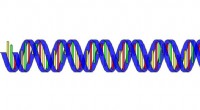
* DNA and RNA: Organisms store and transmit genetic information through DNA and RNA.
* Gene Expression: Genes are expressed to produce proteins that carry out various functions in the cell.
Examples of complex and organized biological systems:
* The human brain: With its billions of interconnected neurons, the brain is responsible for thought, memory, and emotion.
* The immune system: This complex system defends the body against pathogens.
* The circulatory system: Blood is transported throughout the body through a network of blood vessels.
* The digestive system: Food is broken down and absorbed into the bloodstream.
In conclusion, complexity and organization are key features of all living organisms. From the molecular level to the level of entire ecosystems, biological systems exhibit a remarkable level of intricacy and interconnectedness.