Here's how it works:
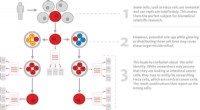
1. Donor Cell: A body cell (somatic cell) is taken from the organism you want to clone. This cell contains the complete genetic blueprint of the organism.
2. Egg Cell: An egg cell is taken from a female of the same species. The nucleus (containing the egg's DNA) is removed from the egg cell.
3. Fusion: The donor cell's nucleus is inserted into the empty egg cell. This is often done using electric pulses.
4. Development: The egg cell, now containing the donor's DNA, is stimulated to start dividing and developing. This creates an embryo that is genetically identical to the donor organism.
5. Implantation: The embryo is implanted into a surrogate mother, where it continues to develop until birth.
Important Note: Cloning is a complex and controversial process with ethical and practical challenges. While it can be used to create genetically identical copies of organisms, it's not a simple or widely used method of reproduction.