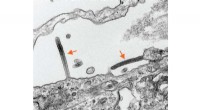
1. Bacteria: Single-celled prokaryotes (lacking a nucleus) that are found everywhere on Earth.
2. Archaea: Another group of single-celled prokaryotes that are often found in extreme environments like hot springs or salt lakes.
3. Protista: A diverse kingdom of mostly single-celled eukaryotes (with a nucleus), including algae, amoebas, and slime molds.
4. Fungi: Heterotrophic eukaryotes that obtain nutrients by absorbing them from their surroundings. They include mushrooms, molds, and yeasts.
5. Plantae: Multicellular eukaryotic organisms that are photosynthetic, meaning they produce their own food. This kingdom includes trees, flowers, grasses, and mosses.
6. Animalia: Multicellular eukaryotes that are heterotrophic and obtain nutrients by ingesting other organisms. This kingdom includes all animals, from insects to humans.
Note: There is some debate within the scientific community about the exact number and definitions of kingdoms. Some systems use only five kingdoms, combining Bacteria and Archaea into a single kingdom called "Monera". However, the six-kingdom system remains widely accepted.