Here's a breakdown:
1. Amino Acid Sequence:
* The primary structure: This is the linear sequence of amino acids in the protein chain. It's like a string of beads, each bead representing an amino acid.
* Amino acid properties: Each amino acid has unique chemical properties (charge, size, polarity, etc.). These properties influence how the amino acids interact with each other and with the surrounding environment.
* Variations in sequence: Even small changes in the sequence can significantly alter the protein's properties. For example, replacing a charged amino acid with a hydrophobic one can impact its solubility or its ability to bind to other molecules.
2. Three-Dimensional Structure:
* The secondary structure: The primary sequence folds into local structures like alpha-helices and beta-sheets, driven by interactions between amino acids. These structures are important for stabilizing the protein and creating functional regions.
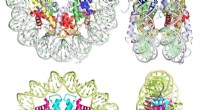
* The tertiary structure: The overall three-dimensional shape of the protein, which results from interactions between different parts of the polypeptide chain. This structure is critical for protein function, as it determines the specific binding sites for other molecules.
* The quaternary structure: Some proteins are made up of multiple polypeptide chains (subunits), and their arrangement in space forms the quaternary structure. This structure can further influence the protein's function and stability.
3. Other Factors:
* Post-translational modifications: After translation, proteins can undergo modifications like phosphorylation, glycosylation, or acetylation. These modifications can alter the protein's structure, stability, and function.
* Environment: The environment in which a protein exists (pH, temperature, ionic strength) can also influence its properties.
In summary: The specific sequence of amino acids determines the protein's primary structure, which then dictates its folding into higher-order structures. These structures, in turn, determine the protein's shape, chemical properties, and ultimately, its function.
Understanding the interplay of these factors is crucial for comprehending the vast diversity and complexity of protein functions in living organisms.