* Size: Nucleic acids are incredibly small molecules, much smaller than the resolution limit of a light microscope.
* Transparency: They are also mostly transparent and lack the contrast needed for visualization.
What you CAN see under a microscope:
* Chromosomes: During cell division (mitosis or meiosis), chromosomes, which are made up of DNA and proteins, become condensed and visible as thick, rod-like structures. This is because they are much larger and more densely packed than individual DNA molecules.
* Nuclei: The nucleus of a cell contains DNA. You can see the nucleus under a light microscope, but not the individual DNA strands within it.
* Special Techniques: To visualize nucleic acids, scientists use special techniques like:
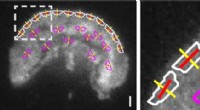
* Fluorescence microscopy: This technique uses fluorescent dyes that bind to specific parts of the nucleic acid molecule. The dyes emit light when illuminated, making the DNA or RNA visible.
* Electron microscopy: Electron microscopes have much higher resolution than light microscopes and can be used to visualize the structure of DNA and RNA in greater detail.
* Staining techniques: Certain dyes (like Giemsa or Wright's stain) can stain chromosomes differentially, revealing their banding patterns.
So, while you can't see the individual DNA or RNA molecules themselves, you can see structures that contain them and use specialized techniques to visualize them.