Levels of Organization:
* Molecular Biology: They study the structure and function of molecules essential for life, like DNA, RNA, and proteins.
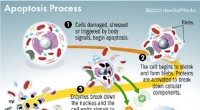
* Cellular Biology: They investigate the structure, function, and behavior of cells, the basic unit of life.
* Tissue Biology: They examine how cells work together to form tissues and organs.
* Organismal Biology: They focus on the anatomy, physiology, and behavior of individual organisms.
* Population Biology: They explore how populations of organisms interact with each other and their environment.
* Community Biology: They study how different populations interact within a particular ecosystem.
* Ecosystem Biology: They examine the interactions between living organisms and their physical environment.
* Biosphere Biology: They study the global interactions between all living things and the Earth's systems.
Processes of Life:
* Genetics: They explore how genes are passed down from one generation to the next and how they influence traits.
* Evolution: They study how life has changed over time through natural selection and other evolutionary processes.
* Ecology: They investigate how organisms interact with each other and their environment.
* Physiology: They examine how organisms function, including processes like digestion, respiration, and reproduction.
* Development: They study how organisms grow and change from a single cell to a complex individual.
* Behavior: They explore the actions and responses of organisms in their environment.
Specific Areas of Interest:
* Biotechnology: They use biological systems and organisms to create new products and technologies.
* Biomedicine: They research and develop new treatments for diseases.
* Conservation Biology: They work to protect and preserve biodiversity.
* Environmental Biology: They study the impact of human activities on the environment.
Examples of Questions Biologists Ask:
* How do cells communicate with each other?
* What are the mechanisms of DNA replication?
* How do ecosystems respond to climate change?
* What are the evolutionary relationships between different species?
* How can we use genetic engineering to develop new crops?
* How do viruses spread and cause disease?
The Scientific Method:
Biologists use the scientific method to answer their questions. This involves:
1. Observation: Making careful observations about the natural world.
2. Hypothesis: Formulating a testable explanation for the observations.
3. Prediction: Making specific predictions based on the hypothesis.
4. Experiment: Designing and conducting controlled experiments to test the predictions.
5. Analysis: Analyzing the experimental data to determine if the hypothesis is supported.
6. Conclusion: Drawing conclusions based on the analysis of the data.
These are just a few examples, and the field of biology is constantly evolving with new questions and discoveries.