Characteristics of Life:
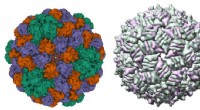
* Cellular Organization: Living organisms are made of cells, the basic unit of life. Viruses lack cells and instead consist of genetic material (DNA or RNA) encased in a protein coat.
* Metabolism: Living things carry out chemical reactions to obtain and use energy. Viruses don't have their own metabolism and rely on host cells for energy and resources.
* Growth and Development: Living organisms increase in size and complexity. While viruses can replicate within host cells, this process doesn't involve growth in the traditional sense.
* Response to Stimuli: Living things react to changes in their environment. Viruses don't show this kind of autonomous response.
* Adaptation and Evolution: Living populations change over time through evolution. Viruses evolve rapidly due to mutations, but this adaptation is entirely dependent on their ability to infect and replicate within host cells.
* Reproduction: Living organisms reproduce to create offspring. While viruses can replicate, they require a host cell to do so. They can't replicate independently.
Why Viruses Don't Fit:
* Acellular: Viruses are not made of cells, a defining characteristic of life.
* Non-Metabolic: They lack their own metabolism and rely entirely on host cells for energy and resources.
* Passive: They don't exhibit active growth or independent responses to stimuli.
* Replication Dependence: Their reproduction is entirely dependent on host cells.
The Debate:
While viruses don't fit neatly into the traditional definition of life, they do display some characteristics of living organisms:
* Genetic Material: Viruses contain DNA or RNA, the blueprint of life.
* Evolution: They undergo rapid evolution, adapting to their environment and hosts.
This leads to ongoing debate about their classification. Some scientists consider viruses to be "obligate intracellular parasites" rather than living things. Others argue that they represent a unique form of life distinct from cellular organisms.
Conclusion:
The debate surrounding the classification of viruses highlights the complex and nuanced nature of defining life. While viruses don't meet all the typical criteria, their unique properties and biological impact make them a fascinating subject of scientific inquiry.