A biological catalyst that speeds up chemical reactions without being consumed in the process.
Here's a breakdown of why:
* Biological: Enzymes are proteins (or sometimes RNA molecules called ribozymes) produced by living organisms.
* Catalyst: Enzymes lower the activation energy of a reaction, making it occur faster. They don't change the equilibrium of the reaction, meaning they don't determine whether a reaction will happen or not, but only how quickly it will happen.
* Not consumed: Enzymes are not used up during the reaction. They can be used repeatedly to catalyze the same reaction.
Key features of enzymes:
* Specificity: Enzymes are highly specific, meaning they typically catalyze only one or a small number of reactions involving specific molecules (substrates).
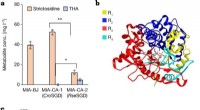
* Active site: Enzymes have a specific region called the active site, where the substrate binds and the reaction takes place.
* Regulation: Enzyme activity can be regulated by factors like temperature, pH, substrate concentration, and the presence of inhibitors or activators.
In short, enzymes are essential for life as we know it, facilitating a vast array of biochemical reactions necessary for everything from digestion and energy production to cell signaling and DNA replication.