Evolution is a fundamental concept in biology, supported by a vast body of evidence from various fields. Here are some key categories of evidence:
1. Fossil Record:
* Transitional Fossils: Fossils showing intermediate stages between ancestral and descendant species, demonstrating gradual change over time. Examples include:
* Archaeopteryx (transitional form between dinosaurs and birds)
* Tiktaalik (transitional form between fish and land-dwelling tetrapods)
* Australopithecus (transitional form between apes and humans)
* Fossil Succession: Fossils appear in a consistent order in the rock layers, with simpler forms found in older layers and more complex forms in newer layers.
* Extinction: Fossils provide evidence of species that have gone extinct, indicating that life is not static but constantly changing.
2. Comparative Anatomy:
* Homologous Structures: Structures with similar underlying anatomy but different functions, indicating a shared common ancestor. Examples: the forelimbs of humans, bats, whales, and crocodiles.
* Analogous Structures: Structures with similar functions but different underlying anatomy, indicating convergent evolution (adaptation to similar environments). Examples: wings of birds and insects.
* Vestigial Structures: Structures with no apparent function, remnants of structures that were functional in ancestral organisms. Examples: the human appendix, the pelvic bones of whales, and the wings of flightless birds.
3. Comparative Embryology:
* Developmental Similarities: Early embryos of different species often exhibit striking similarities, suggesting a common ancestor. Examples: vertebrate embryos all share a stage where they have gill slits and a tail.
* Atavisms: Rare reappearance of ancestral traits, indicating the presence of dormant genes. Examples: human babies born with tails or extra nipples.
4. Molecular Biology:
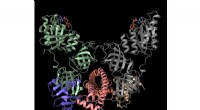
* DNA and Protein Similarities: Closely related species share more DNA and protein sequences than distantly related species.
* Genetic Evidence: DNA mutations and gene duplication provide the raw material for evolution.
* Biogeography: Distribution of species across the globe supports the theory of evolution. Examples: the distribution of endemic species on islands or continents.
5. Direct Observation of Evolution:
* Antibiotic Resistance: Rapid evolution of antibiotic-resistant bacteria in response to antibiotic use.
* Artificial Selection: Humans selectively breeding animals and plants for desired traits, demonstrating the power of selection to drive change.
* Evolution in Real Time: Researchers have observed evolution in action in natural populations, like Darwin's finches in the Galapagos Islands.
Conclusion:
This vast and diverse evidence provides compelling support for the theory of evolution as a fundamental principle underlying the diversity of life on Earth. It's a constantly evolving field of research with new discoveries adding further evidence to the interconnectedness of all living things and their shared evolutionary history.