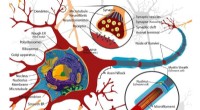
* Mitochondria: These are the powerhouses of the cell, responsible for producing ATP (adenosine triphosphate), the energy currency of the cell. Muscles require a lot of energy for contraction, so they have a high number of mitochondria.
* Sarcoplasmic reticulum (SR): This is a specialized endoplasmic reticulum that stores calcium ions (Ca²⁺). When a muscle cell receives a signal to contract, Ca²⁺ is released from the SR and triggers the contraction process.
* Myofibrils: These are long, cylindrical structures that make up muscle fibers. Myofibrils are composed of thin filaments (actin) and thick filaments (myosin), which slide past each other during muscle contraction.
* T-tubules: These are invaginations of the plasma membrane that extend deep into the muscle fiber. T-tubules help to transmit the signal for muscle contraction from the surface of the cell to the interior.
While not as numerous as the above, muscle cells also have other organelles, such as:
* Nuclei: Muscle cells are multinucleated, meaning they have multiple nuclei. This helps to coordinate the production of proteins needed for muscle contraction.
* Golgi apparatus: This organelle packages and transports proteins, which are essential for muscle function.
* Lysosomes: These organelles are responsible for breaking down waste products.
In summary, muscle cells are highly specialized cells that require a lot of energy and coordinated protein synthesis for contraction. As such, they have a high abundance of mitochondria, sarcoplasmic reticulum, myofibrils, and T-tubules.