Here's a breakdown:
* Sister Chromatids: These are essentially copies of each other, containing identical genetic information. They are formed during DNA replication in the S phase of the cell cycle.
* Centromere: This is a specialized region on the chromosome that serves as the attachment point for microtubules (part of the spindle apparatus) during cell division.
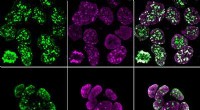
* Chromatin: Before condensation, DNA exists in a less compact form called chromatin. This is a complex of DNA and proteins that allows for the efficient packaging of the long DNA molecule within the nucleus.
In summary, when chromosomes become visible at the beginning of cell division, each chromosome consists of two identical sister chromatids joined together at the centromere.