Here's a breakdown of what evolution encompasses:
Key Components:
* Genetic Variation: Differences in genes within a population arise due to mutations (changes in DNA).
* Natural Selection: Organisms with traits better suited to their environment are more likely to survive, reproduce, and pass on those advantageous traits.
* Inheritance: Traits are passed from parents to offspring, ensuring the continuation of successful adaptations.
* Time: Evolution occurs over long periods, often spanning thousands or millions of years.
What it Doesn't Mean:
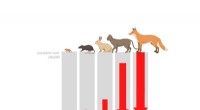
* Evolution is not a "ladder" with humans at the top. All species are equally evolved, adapting to their own environments.
* Evolution doesn't mean "progress" or "improvement." It's about change, not always towards greater complexity or superiority.
* Evolution is not about individual organisms changing. It's about changes in the overall frequency of traits within a population.
Examples:
* The development of antibiotic resistance in bacteria.
* The evolution of long necks in giraffes to reach high leaves.
* The diversification of finches on the Galapagos Islands.
Understanding evolution is crucial for various scientific fields, including medicine, agriculture, and conservation. It helps us comprehend the origin of life, understand disease spread, develop new medicines, and protect biodiversity.