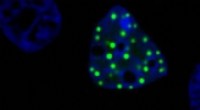
The nucleus is the control center of a eukaryotic cell, holding the cell's genetic information in the form of DNA. It's essentially the brain of the cell, dictating its activities and ensuring the proper functioning of the organism.
Here's a breakdown of its key functions:
* Stores genetic material (DNA): DNA contains the instructions for building and maintaining the entire organism. The nucleus protects this valuable information.
* Controls cellular activities: The DNA within the nucleus contains genes that control the production of proteins. Proteins are responsible for virtually every function within a cell, from building structures to catalyzing chemical reactions.
* Regulates cell division: The nucleus ensures that each daughter cell receives a complete set of chromosomes during cell division. This is crucial for maintaining the genetic integrity of the organism.
* Production of ribosomes: Ribosomes are tiny structures responsible for protein synthesis. The nucleus plays a role in their production.
Location:
The nucleus is typically located in the center of a eukaryotic cell. It is surrounded by a double membrane called the nuclear envelope, which regulates the passage of molecules in and out of the nucleus. Within the nucleus, the DNA is organized into chromosomes.
In summary, the nucleus is an essential organelle in eukaryotic cells that plays a crucial role in the storage, protection, and regulation of the cell's genetic information. It dictates the cell's activities and is essential for proper cellular function and organism development.