* Cell growth and division: Cells must multiply and increase in size to build tissues and organs.
* Cell differentiation: Cells must specialize into different types, like muscle cells, nerve cells, or skin cells.
* Cell movement and migration: Cells must move and rearrange themselves to form the correct structures.
* Apoptosis (programmed cell death): Certain cells must die off in a controlled manner for proper development.
* Extracellular matrix (ECM) deposition: The ECM, a network of molecules outside of cells, provides structure and support.
* Signal transduction pathways: These pathways control the flow of information within cells, coordinating their activity.
In simpler terms, morphogenesis is the process of how organisms "build" themselves from a single fertilized egg into a complex being.
Here are some examples of morphogenesis in action:
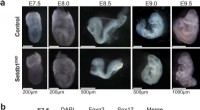
* The development of a human embryo: From a single cell, the embryo develops all the organs and tissues of a human body.
* The formation of a leaf: A plant's leaf emerges from a bud, undergoing cell division and differentiation to create its distinct shape.
* The regeneration of a limb: Some animals can regrow lost limbs through a process of morphogenesis.
Morphogenesis is a complex and fascinating process, driven by the interaction of genetic instructions and environmental factors. Understanding this process is key to understanding how organisms develop, how evolution works, and how to address developmental disorders.