The cell membrane is a thin, flexible barrier that:
* Separates the cell's internal environment (cytoplasm) from the external environment.
* Controls the movement of substances into and out of the cell. This selectivity is crucial for maintaining the cell's internal environment and carrying out essential functions.
* Provides structural support and shape to the cell.
* Allows cells to communicate with each other.
The cell membrane is primarily composed of a phospholipid bilayer, a double layer of phospholipid molecules. These molecules have a hydrophilic (water-loving) head and a hydrophobic (water-fearing) tail. The hydrophilic heads face outwards towards the watery environments inside and outside the cell, while the hydrophobic tails face inwards, forming a barrier to water-soluble substances.
The cell membrane also contains various other components, including:
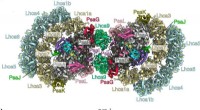
* Proteins: Embedded within the phospholipid bilayer, proteins perform a variety of functions, such as transporting substances across the membrane, acting as receptors for signals, and providing structural support.
* Cholesterol: Helps to maintain the fluidity of the membrane.
* Carbohydrates: Found on the outer surface of the membrane, they play a role in cell recognition and signaling.