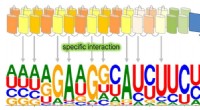
Morphology:
* Focuses on: Physical characteristics, like the shape, size, and structure of organisms.
* Types of evidence: Bones, shells, teeth, external features, internal organs, etc.
* Advantages: Often readily available, can be studied in both living and extinct organisms, can provide insights into function and adaptation.
* Disadvantages: Can be influenced by environmental factors, convergent evolution (similar traits evolving independently in unrelated species), and limited by the availability of preserved structures.
Molecular Evidence:
* Focuses on: The genetic makeup of organisms, specifically DNA and RNA sequences.
* Types of evidence: Genes, proteins, and other molecular markers.
* Advantages: Can provide more detailed and precise information about relationships, less prone to convergent evolution, can be used to study even distantly related organisms.
* Disadvantages: Requires advanced laboratory techniques, can be more expensive, may be influenced by genetic drift and horizontal gene transfer.
Here's a table summarizing the differences:
| Feature | Morphology | Molecular Evidence |
|---|---|---|
| Focus | Physical characteristics | Genetic makeup |
| Types of evidence | Bones, shells, teeth, etc. | DNA, RNA, proteins |
| Advantages | Readily available, useful for extinct organisms, functional insights | More detailed, less prone to convergent evolution |
| Disadvantages | Influenced by environment, convergent evolution | Requires lab techniques, expensive |
In summary:
* Morphology is like looking at the outside of a car and trying to figure out its engine based on the design.
* Molecular evidence is like opening the hood and examining the engine components directly.
While both approaches have their strengths and weaknesses, combining morphological and molecular evidence provides a more complete and robust understanding of evolutionary relationships. This is why modern phylogeny often relies on both types of data.