1. Similarities in Cellular Structure and Function:
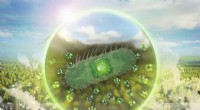
* Prokaryotic features in eukaryotic cells: Eukaryotic cells, the building blocks of multicellular organisms, have many features resembling prokaryotes. These include:
* Ribosomes: Both prokaryotes and eukaryotes have ribosomes, which are the protein-making machinery. While the ribosomes differ in size, they share a common structure and function.
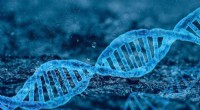
* DNA: Both prokaryotes and eukaryotes use DNA as their genetic material. Although eukaryotic DNA is organized in a nucleus, the basic structure and function of DNA is similar.
* Cell membrane: Both prokaryotes and eukaryotes have a cell membrane that regulates what enters and exits the cell.
* Endosymbiotic theory: This theory explains the origin of mitochondria and chloroplasts in eukaryotic cells. These organelles are believed to have evolved from free-living prokaryotes that were engulfed by early eukaryotic cells.
* This is supported by the fact that mitochondria and chloroplasts have their own DNA, similar to prokaryotic DNA, and they replicate independently of the host cell.
2. Fossil Evidence:
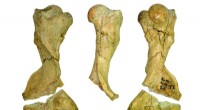
* Early fossils: The earliest fossils of multicellular organisms are much younger than the oldest fossils of prokaryotes. This supports the idea that prokaryotes existed for a very long time before multicellular life arose.
* Transitional fossils: Some fossils have been found that show characteristics of both prokaryotes and eukaryotes, suggesting a gradual transition from one to the other. For example, the fossil *Cyanobacteria* show evidence of early multicellularity, indicating a possible link between prokaryotes and early multicellular organisms.
3. Phylogenetic Analysis:
* Molecular evidence: Comparisons of DNA and protein sequences from different organisms show that prokaryotes are the closest relatives of eukaryotes. This suggests a common ancestor for all life on Earth, with eukaryotes evolving from prokaryotes.
* Tree of Life: Phylogenetic trees, based on molecular data, place eukaryotes within the domain Bacteria, indicating a close evolutionary relationship.
4. Evolutionary Experiments:
* Laboratory experiments: Researchers have successfully created artificial "protocells" from basic materials in the lab, demonstrating the potential for life to emerge from simpler forms.
* Experimental evolution: Studies have shown that single-celled organisms can evolve to cooperate and form multicellular structures under certain environmental conditions.
Overall, the evidence from diverse fields of biology strongly suggests that multicellular organisms evolved from prokaryotes. This idea is a cornerstone of our understanding of the history of life on Earth.