Here's why:
* Challenged the traditional view: Margulis challenged the prevailing view that eukaryotes evolved gradually through a series of small, incremental changes.
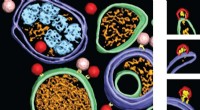
* Proposed symbiosis as a driving force: She proposed that key eukaryotic organelles, like mitochondria and chloroplasts, originated from the engulfment and symbiotic relationship of prokaryotic cells.
* Evidence-based arguments: Margulis presented a compelling case for her theory, drawing on evidence from comparative anatomy, genetics, and biochemistry.
* Shift in perspective: Her work fundamentally shifted how biologists think about the evolution of eukaryotes, emphasizing the importance of symbiosis as a major evolutionary driver.
While Margulis' theory was initially met with resistance, it has since become widely accepted and is now considered a cornerstone of evolutionary biology.
Other influential scientists in eukaryotic evolution include:
* Carl Woese: He developed the three-domain system of life, recognizing the distinctness of archaea and their potential role in eukaryotic evolution.
* Thomas Cavalier-Smith: He has proposed several influential theories about the evolution of eukaryotic lineages, including the origin of the nucleus.
While Margulis' work stands out for its revolutionary impact, it's important to acknowledge the contributions of many scientists who continue to shape our understanding of the complex evolutionary history of eukaryotes.