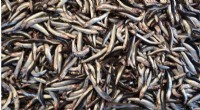
* The Fundamental Principle: Organisms tend to produce more offspring than can survive. This is a basic biological drive, ensuring that at least some offspring make it to adulthood and reproduce themselves.
* Resource Limitation: The environment, however, has finite resources – food, water, space, etc. This means that only a small portion of the offspring will actually survive to reproduce.
* The Struggle for Existence: The excess offspring creates competition for those resources, leading to a "struggle for existence." Only the individuals best suited to their environment (through advantageous traits) will survive and reproduce.
* Natural Selection: This survival of the fittest is what Darwin called "natural selection." The traits that make an organism more successful in surviving and reproducing are passed on to the next generation, leading to evolutionary change over time.
In summary, over-reproduction isn't a mistake; it's a key driving force in the evolutionary process. It creates the pressure that leads to natural selection, driving the adaptation of species to their environments.