Spatial distribution in organisms refers to how individuals of a species are arranged within a particular area. This involves two key aspects:
1. Geographic Range: The overall area where a species can be found. This is influenced by factors like climate, resources, and the presence of predators or competitors.
2. Population Distribution: The arrangement of individuals within that geographic range. This can be:
* Random: Individuals are distributed without a pattern, often occurring in habitats with uniform conditions and minimal interactions.
* Uniform: Individuals are evenly spaced, often due to competition for resources or territoriality.
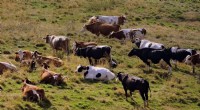
* Clumped: Individuals are grouped together, usually due to resource availability, social interactions, or protection from predators.
Factors influencing spatial distribution:
* Resource availability: Food, water, and shelter influence where organisms live.
* Competition: Interactions between individuals can lead to uniform or clumped distribution.
* Predation: Organisms may cluster in areas with good defense against predators.
* Habitat heterogeneity: Diverse habitats offer different opportunities for survival and reproduction.
* Dispersal: Movement of individuals can influence population distribution.
* Climate: Temperature, rainfall, and other climatic factors define suitable areas for organisms.
Why is spatial distribution important?
* Understanding ecosystems: It helps us understand how organisms interact with their environment and each other.
* Conservation efforts: Knowing the spatial distribution of endangered species can help in their protection.
* Disease management: Understanding disease spread requires knowing how populations are distributed.
* Resource management: Optimizing resource use for humans and other species relies on understanding spatial distribution.
Examples:
* Random: Dandelions in a meadow might be randomly distributed due to wind dispersal of seeds.
* Uniform: Trees in a forest might be evenly spaced due to competition for sunlight.
* Clumped: A herd of zebras grazing in a savanna might be clumped together for safety and resource sharing.
In conclusion:
Spatial distribution is a fundamental concept in ecology, providing insight into how organisms interact with their environment. By understanding the factors influencing distribution patterns, we can better understand ecosystems, manage resources, and protect biodiversity.