1. Cell Wall:
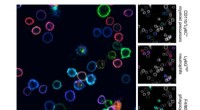
* Plant cells have a rigid cell wall outside the cell membrane. This wall is present throughout the entire cell cycle, including mitosis. You can see this as a thick, distinct outer boundary.
* Animal cells lack a cell wall and have only a cell membrane.
2. Cytokinesis:
* Plant cells form a cell plate during cytokinesis. This structure starts from the center of the cell and grows outwards to form a new cell wall, eventually dividing the cell into two daughter cells.
* Animal cells undergo furrowing during cytokinesis. The cell membrane pinches inwards from the edges, creating a cleavage furrow that eventually divides the cell into two.
3. Centrioles:
* Animal cells have centrioles, small cylindrical structures that are involved in organizing microtubules and forming the spindle fibers during mitosis.
* Plant cells usually lack centrioles.
4. Vacuoles:
* Plant cells have a large central vacuole that occupies most of the cell volume.
* Animal cells have smaller vacuoles, if any.
5. Shape:
* Plant cells are typically rectangular or cuboidal due to their rigid cell wall.
* Animal cells exhibit a variety of shapes depending on their function.
Overall: The presence of a cell wall, the formation of a cell plate during cytokinesis, and the absence of centrioles are the most reliable indicators of a plant cell undergoing mitosis.
Note: While these are the general distinctions, there are exceptions to these characteristics in specific plant and animal cell types. Therefore, it's essential to consider multiple features to accurately identify the cell type.