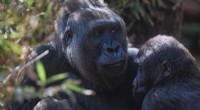
Organisms are the fundamental units of life, and they are characterized by a set of shared features. Here are some of the most important characteristics:
1. Organization:
* Cellular Structure: All living organisms are composed of one or more cells, the basic unit of life. These cells are highly organized, with specialized structures and functions.
* Levels of Organization: Life exhibits hierarchical organization, starting from the simplest molecules and progressing to complex organ systems. This includes:
* Atoms -> Molecules -> Macromolecules -> Organelles -> Cells -> Tissues -> Organs -> Organ Systems -> Organism
2. Metabolism:
* Energy Transformation: Organisms obtain and use energy to sustain life processes. This includes chemical reactions that break down food for energy (catabolism) and build complex molecules (anabolism).
* Homeostasis: Organisms maintain a stable internal environment, despite external changes. This involves regulating temperature, pH, water balance, and other essential factors.
3. Growth and Development:
* Increase in Size: Organisms increase in size and complexity over time. This involves the synthesis of new cells and molecules.
* Differentiation: Cells become specialized for specific functions, forming tissues and organs.
* Life Cycle: Organisms have a defined life cycle, progressing through stages from birth to death.
4. Reproduction:
* Genetic Information: Organisms transmit genetic information from one generation to the next, ensuring continuity of life. This information is encoded in DNA or RNA.
* Heredity: Offspring inherit traits from their parents, leading to similarities and variations within species.
5. Responsiveness:
* Stimulus-Response: Organisms respond to internal and external stimuli, adjusting to changes in their environment.
* Adaptation: Over long periods, organisms evolve adaptations that increase their survival and reproductive success.
6. Evolution:
* Change Over Time: Organisms undergo gradual changes over generations, driven by natural selection. This leads to the diversity of life on Earth.
* Common Ancestry: All life on Earth shares a common ancestor, evidenced by similarities in genetic code and biochemical processes.
Beyond these fundamental characteristics, organisms exhibit a vast array of specific features:
* Diversity: Life encompasses a wide range of sizes, shapes, and behaviors, adapting to various ecological niches.
* Complexity: Organisms exhibit varying degrees of complexity, from single-celled bacteria to multicellular animals.
* Interdependence: Organisms interact with each other and their environment, forming intricate ecological webs.
Understanding these characteristics provides a framework for studying and appreciating the amazing diversity and complexity of life on Earth.