* Friedrich Miescher (1869): Discovered a substance he called "nuclein" in the nuclei of white blood cells. This substance was later identified as DNA.
* Frederick Griffith (1928): Conducted experiments with pneumococcal bacteria that demonstrated a "transforming principle" could transfer genetic information from one strain to another. This hinted at the existence of a hereditary molecule.
* Oswald Avery, Colin MacLeod, and Maclyn McCarty (1944): Identified the transforming principle as DNA. They showed that purified DNA could transform non-virulent bacteria into virulent ones, proving its role in heredity.
* Alfred Hershey and Martha Chase (1952): Performed the famous "Hershey-Chase experiment" using bacteriophages (viruses that infect bacteria). Their work definitively demonstrated that DNA, not protein, is the genetic material.
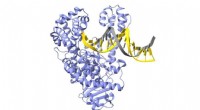
* James Watson and Francis Crick (1953): Proposed the double helix structure of DNA based on X-ray diffraction images taken by Rosalind Franklin. This model explained how DNA could replicate itself and store genetic information.
These scientists, along with many others, pieced together the puzzle of DNA as the hereditary material, revolutionizing our understanding of genetics and heredity.