Here's why:
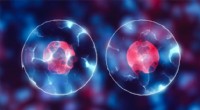
* Meiosis is a type of cell division that reduces the number of chromosomes in a cell by half. It occurs in sexually reproducing organisms to produce gametes (sperm and egg cells).
* Haploid cells have only one set of chromosomes, whereas diploid cells have two sets.
* Meiosis I separates homologous chromosomes, resulting in two haploid cells.
* Meiosis II separates sister chromatids, resulting in a total of four haploid cells.
Therefore, a single cell that undergoes meiosis produces four genetically distinct haploid cells.