1. Viruses: Viruses are considered non-living by many biologists because they lack the basic characteristics of life, such as the ability to reproduce independently. They are essentially packets of genetic material (DNA or RNA) enclosed in a protein coat. They can only replicate inside a host cell. So, in terms of structure and complexity, viruses are arguably the simplest.
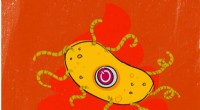
2. Bacteria: Bacteria are single-celled prokaryotic organisms that lack a nucleus and other membrane-bound organelles. They are much simpler in structure than eukaryotic cells, but they can carry out all the functions of life independently.
3. Mycoplasmas: These are bacteria that lack a cell wall, making them even simpler than typical bacteria. However, they are still considered to be living organisms.
4. Prions: These are infectious agents that consist only of misfolded proteins. They are simpler than viruses, but they are also considered non-living.
So, it really depends on how you define "simplest." If you're looking at structural complexity, viruses are the clear winners. However, if you're looking at the ability to carry out the functions of life, then bacteria, and especially Mycoplasmas, are the simplest.