* The main player: RNA polymerase is the enzyme responsible for transcribing DNA.
* The process:
* RNA polymerase binds to a specific region of DNA called a promoter located at the beginning of a gene.
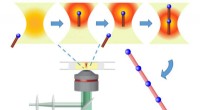
* RNA polymerase unwinds the DNA double helix, separating the two strands.
* One strand of DNA serves as a template for the synthesis of a new RNA molecule.
* RNA polymerase reads the DNA template strand and uses it to assemble a complementary RNA molecule.
* The RNA molecule is made of nucleotides similar to DNA, but instead of thymine (T), it uses uracil (U).
* Once the gene is transcribed, the RNA molecule detaches from the DNA and is ready for further processing.
Types of RNA:
* Messenger RNA (mRNA): Carries the genetic code from DNA to the ribosomes, where proteins are made.
* Ribosomal RNA (rRNA): Forms the structural core of ribosomes, the cellular machinery that translates mRNA into proteins.
* Transfer RNA (tRNA): Delivers amino acids to ribosomes during protein synthesis.
In summary, RNA polymerase is the enzyme that "picks up" information from DNA by transcribing it into RNA. This RNA then carries the genetic instructions to other cellular locations, where proteins are made.