Here's why:
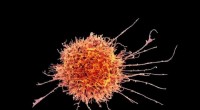
* Structure: The cell membrane is a thin, flexible layer that surrounds the entire cell. It's made up of a phospholipid bilayer, with a hydrophobic (water-repelling) interior and hydrophilic (water-attracting) exterior.
* Selective Permeability: The cell membrane is selectively permeable, meaning it allows some substances to pass through while blocking others. This is crucial for maintaining the cell's internal environment.
* Control Mechanisms: The membrane contains various proteins embedded within it that play important roles in regulating transport:
* Passive Transport: Some substances move across the membrane freely, driven by concentration gradients (diffusion) or pressure (osmosis).
* Active Transport: Other substances require energy to move against their concentration gradient. This is achieved by specific transport proteins that use energy from ATP.
In essence, the cell membrane is a dynamic gatekeeper that regulates the flow of nutrients, waste products, signaling molecules, and other essential substances in and out of the cell.