1. Fossil Record:
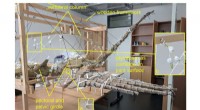
* Fossils provide direct evidence of past life forms and show how organisms have changed over time.
* Transitional fossils document the evolutionary steps between different species, showing how features have evolved gradually.
* The fossil record shows a clear pattern of increasing complexity and diversity over time, consistent with evolution.
2. Comparative Anatomy:
* Homologous structures are anatomical features that share a common ancestor, but have different functions. This suggests a common evolutionary origin.
* Vestigial structures are non-functional or reduced structures in an organism that were functional in its ancestors, indicating a change in selective pressures.
* Analogous structures are features that have similar functions but different evolutionary origins, demonstrating convergent evolution.
3. Molecular Biology:
* DNA and protein sequences can be compared across species to reveal evolutionary relationships.
* The universality of the genetic code suggests a common ancestor for all life on Earth.
* The accumulation of mutations over time provides a molecular clock that can estimate evolutionary relationships.
4. Biogeography:
* The distribution of species on Earth reflects their evolutionary history.
* Island biogeography shows how isolated islands can give rise to unique species due to adaptation to their environment.
* Continental drift explains the distribution of fossils and species across continents.
5. Direct Observation:
* Evolution can be observed directly in some cases, such as the evolution of antibiotic resistance in bacteria.
* Artificial selection in agriculture and animal breeding demonstrates the power of selection to change organisms over time.
It is important to note that evolution is a scientific theory, which means it is an explanation of the natural world that is supported by a vast body of evidence and has been repeatedly tested and confirmed. This evidence comes from various fields of study, all converging to support the reality of evolution.