* Prokaryotic cells: These are simple cells that lack a nucleus and other membrane-bound organelles. Bacteria and archaea are examples of organisms with prokaryotic cells.
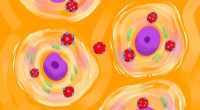
* Eukaryotic cells: These are more complex cells that have a nucleus and other membrane-bound organelles. Animals, plants, fungi, and protists are examples of organisms with eukaryotic cells.
Therefore, the cell theory is a universal principle that applies to all forms of life, regardless of their complexity or cellular structure.