Early Discoveries (17th-19th Century):
* 1665: Robert Hooke observes "cells" in cork using a crude microscope, marking the first recorded observation of cells.
* 1674: Anton van Leeuwenhoek, a Dutch scientist, observes living cells like bacteria and protozoa using his own powerful microscopes.
* 1831: Robert Brown discovers the nucleus in plant cells, paving the way for understanding the role of this vital organelle.
* 1838: Matthias Schleiden proposes that all plants are composed of cells.
* 1839: Theodor Schwann extends Schleiden's theory to animals, establishing the "cell theory" - all living organisms are composed of cells.
* 1855: Rudolf Virchow proposes that all cells arise from pre-existing cells, completing the cell theory.
Development of Microscopy and Cell Culture (Late 19th-Early 20th Century):
* 1882: Walter Flemming describes the process of mitosis, revealing how cells divide and replicate.
* 1902: Walter Sutton and Theodor Boveri independently propose the chromosomal theory of inheritance, linking chromosomes to genes.
* 1911: Wilhelm Johannsen coins the term "gene" to describe the basic unit of heredity.
* 1913: Max Knoll and Ernst Ruska develop the first transmission electron microscope, enabling the visualization of internal cell structures.
* 1950s: Development of cell culture techniques allows for controlled study of isolated cells.
Molecular Era and Beyond (Mid-20th Century - Present):
* 1940s: George Beadle and Edward Tatum establish the "one gene - one enzyme" hypothesis, linking genes to specific functions.
* 1952: Alfred Hershey and Martha Chase prove that DNA, not protein, carries genetic information, revolutionizing molecular biology.
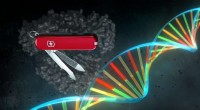
* 1953: James Watson and Francis Crick propose the double helix structure of DNA, a landmark discovery explaining how genetic information is stored and replicated.
* 1960s: The development of the electron microscope allows for high-resolution imaging of organelles and cellular processes.
* 1970s: The development of monoclonal antibodies allows for specific targeting of cellular components, leading to advances in diagnosis and treatment.
* 1970s-80s: The development of recombinant DNA technology allows for manipulation of genes, leading to the development of new medicines and therapies.
* 1980s: The development of the polymerase chain reaction (PCR) allows for the amplification of DNA, revolutionizing genetic analysis and diagnostics.
* 1990s: The Human Genome Project maps the entire human genome, paving the way for personalized medicine and understanding complex diseases.
* Present: Advancements in imaging techniques, such as super-resolution microscopy, allow for the visualization of individual molecules within cells. Emerging technologies like CRISPR-Cas9 gene editing are revolutionizing our ability to understand and manipulate cellular processes.
The study of cell biology is ongoing, with new discoveries and technologies constantly pushing the boundaries of our understanding of life at the cellular level.