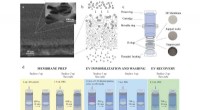
* Facilitated Diffusion: A type of passive transport where molecules move across a cell membrane with the help of carrier proteins. This process doesn't require energy, but it does rely on the presence of these proteins.
* Carrier Proteins: These proteins bind to specific molecules on one side of the membrane, change shape, and release the molecules on the other side. They act like a shuttle service, helping molecules move across the membrane even if they can't pass through on their own.
Here are some key points about carrier proteins and their importance:
* Specificity: Each carrier protein is designed to bind to a specific molecule or group of molecules. This specificity ensures the right molecules are transported across the membrane.
* Concentration Gradient: Facilitated diffusion still relies on the concentration gradient. Molecules move from a region of higher concentration to lower concentration, even with the help of carrier proteins.
* Saturation: Carrier proteins can become saturated if the concentration of the transported molecule is very high. This means they can only move molecules at a certain rate, and there's a limit to how much they can transport.
Examples of facilitated diffusion with carrier proteins:
* Glucose transport into cells: Carrier proteins like GLUT1 and GLUT4 facilitate the movement of glucose from the bloodstream into cells.
* Amino acid uptake: Specific carrier proteins help cells absorb amino acids from the surrounding environment.
* Transport of ions: Carrier proteins can help move ions like sodium, potassium, and chloride across the cell membrane, contributing to processes like nerve impulse transmission.
In conclusion, carrier proteins are crucial for facilitated diffusion, allowing cells to transport important molecules across their membranes efficiently and selectively, without the need for energy expenditure.