* Early Microscopes Had Limitations: While microscopes were invented in the 17th century, they were crude and had limited magnification. This meant that the details of cells, especially their internal structures, were difficult to observe.
* Focus on Individual Structures: Early microscopists were fascinated by the diverse structures they could see through their microscopes, but they often focused on individual components rather than seeing them as parts of a unified system. They often described these structures as "animalcules" or "globules" without understanding their true significance.
* The "Cell Theory" Was a Gradual Development: The concept of the cell theory, which states that all living things are made of cells, wasn't a single Eureka moment. It emerged through a series of observations, experiments, and debates spanning several decades. Here are some key contributors:
* Robert Hooke (1665): Observed cell walls in cork, but didn't understand their true nature.
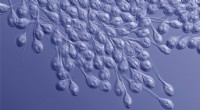
* Anton van Leeuwenhoek (1674): Observed single-celled organisms (like bacteria and protozoa) but didn't connect them to the structures Hooke had seen.
* Matthias Schleiden (1838) and Theodor Schwann (1839): Independently proposed that all plant and animal tissues were made of cells.
* Rudolf Virchow (1855): Added the crucial idea that cells only arise from pre-existing cells, completing the cell theory.
* Difficulties in Studying Cells: Studying cells was challenging because they were incredibly small and lacked the sophisticated tools available today. Techniques like staining, which help visualize cells, were not developed until later.
In summary, the acceptance of the cell theory was a gradual process, influenced by limitations in technology, the focus on individual observations, and the gradual development of the theory itself.