Multicellular Organisms:
* Cells are interdependent: Individual cells are highly specialized and dependent on each other for survival. They work together as a cohesive unit, with different cells performing different functions.
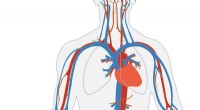
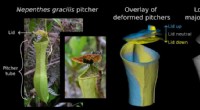
* Specialized tissues and organs: Cells form distinct tissues (e.g., muscle, nervous, epithelial) and organs (e.g., heart, brain, stomach), each contributing to the overall function of the organism.
* Communication and coordination: Cells communicate with each other through complex signaling pathways, allowing for coordinated activity and responses to external stimuli.
* Genetic individuality: Each cell within a multicellular organism shares the same genome, but specific genes are expressed differently in different cell types, leading to specialization.
* Embryonic development: Multicellular organisms arise from a single fertilized egg that undergoes a series of cell divisions and differentiations, forming a complex, integrated organism.
Colonies of Unicellular Organisms:
* Cells are independent: Individual cells within a colony are largely self-sufficient and can survive on their own. They may show some degree of cooperation, but they are not truly interdependent.
* Limited specialization: While some cells in a colony may have slightly different functions, they don't form distinct tissues or organs. The colony's overall function is largely determined by the individual capabilities of each cell.
* Simpler communication: Cells in a colony may communicate through basic signaling mechanisms, but their coordination is less complex than in multicellular organisms.
* Genetic similarity: Cells in a colony are often genetically identical, but they may differ slightly due to mutations.
* Formation: Colonies form through the aggregation of individual cells, either by asexual reproduction or by cells remaining attached after division.
In Summary:
| Feature | Multicellular Organism | Colony of Unicellular Organisms |
|---|---|---|
| Cell interdependence | Highly interdependent | Largely independent |
| Specialization | Highly specialized tissues and organs | Limited specialization |
| Communication and coordination | Complex signaling pathways | Simpler communication mechanisms |
| Genetic individuality | Same genome, different gene expression | Genetically similar, with potential for mutations |
| Formation | Embryonic development | Aggregation of individual cells |
Examples:
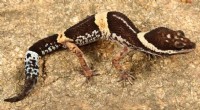
* Multicellular Organisms: Animals, plants, fungi
* Colonies of Unicellular Organisms: Volvox, corals, some bacteria
In conclusion, while both multicellular organisms and colonies of unicellular organisms involve multiple cells, the key distinction lies in the level of integration, specialization, and coordination between those cells. Multicellular organisms exhibit a much higher degree of complexity and interdependence, allowing them to perform a wider range of functions and adapt to diverse environments.