Here's why:
* Size: Bacteria are microscopic organisms, meaning they are too small to be seen with the naked eye. A light microscope provides the magnification needed to visualize their shape, structure, and sometimes even internal features.
* Resolution: Light microscopes offer sufficient resolution to distinguish between different bacterial shapes (cocci, bacilli, spirilla) and even some basic internal structures like the presence of spores or capsules.
However, depending on the specific research question, other types of microscopes might be used for studying bacteria:
* Electron microscopes (TEM and SEM): These microscopes provide much higher magnification and resolution than light microscopes. They are used for studying the ultrastructure of bacteria, including details of their cell wall, membranes, and internal organelles.
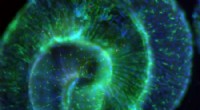
* Fluorescence microscopes: These microscopes use fluorescent dyes to label specific bacterial components, allowing researchers to study their location and function within the cell or in their environment.
So, while a light microscope is the most common tool for examining bacteria, other types of microscopes can be used for more specialized research.