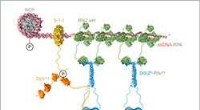
Formation of the Enzyme-Substrate Complex
1. Weak Bonds Form: The enzyme and substrate come together, forming weak bonds (like hydrogen bonds or Van der Waals forces). This is often driven by complementary shapes and chemical properties between the enzyme's active site and the substrate.
2. Induced Fit: The binding of the substrate can cause a slight change in the enzyme's shape, inducing a better fit and optimizing the interactions for catalysis.
Breaking and Making Bonds in the Active Site
1. Substrate Bonds Weaken: The enzyme, through its active site, puts stress on specific bonds within the substrate molecule. This stress makes these bonds easier to break.
2. New Bonds Form: In many cases, the enzyme facilitates the formation of new bonds. This can involve the addition of a chemical group from the enzyme or from the environment.
Breakdown of the Enzyme-Substrate Complex
1. Product Formation: The enzyme releases the newly formed product(s).
2. Enzyme Regeneration: The enzyme returns to its original shape and is ready to bind to another substrate molecule.
Key Points:
* Specificity: Enzymes are highly specific, meaning they only bind to and catalyze reactions involving specific substrates.
* Activation Energy Reduction: Enzymes lower the activation energy required for a reaction to occur, speeding up the reaction rate.
* Catalytic Cycle: The entire process of enzyme-substrate binding, catalysis, and product release is a cyclical process.
Example:
Imagine a lock and key analogy. The enzyme is the lock, and the substrate is the key. The key (substrate) fits perfectly into the lock (enzyme's active site) and triggers the lock to open (catalyze the reaction). The lock then returns to its original state, ready to accept another key.
Let me know if you have any other questions!