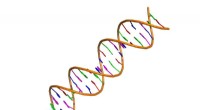
1. Lack of a nucleus: Prokaryotes store their genetic material (DNA) in a region called the nucleoid, which is not enclosed by a membrane. This differentiates them from eukaryotic cells, which have a well-defined nucleus.
2. Simple internal structure: They lack the complex internal membrane systems and organelles found in eukaryotes. For example, they don't have mitochondria for energy production or Golgi apparatus for protein packaging.
3. Presence of a cell wall: Almost all prokaryotes have a rigid cell wall surrounding their cell membrane, providing structural support and protection.
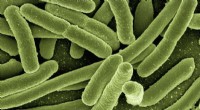
4. Smaller size: Prokaryotic cells are typically much smaller than eukaryotic cells, ranging from 0.1 to 10 micrometers in diameter.
These four features contribute to the simplicity and efficiency of prokaryotic cells, allowing them to thrive in diverse environments.