Here's how it works:
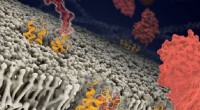
* Glucose Transporters: Specialized proteins called glucose transporters (GLUTs) are embedded in the cell membrane. These transporters have a specific binding site for glucose.
* Concentration Gradient: Glucose typically has a higher concentration outside the cell than inside. This difference in concentration creates a gradient.
* Binding and Transport: Glucose binds to the GLUT transporter on the outside of the cell. This binding event causes a conformational change in the transporter, allowing glucose to move across the membrane into the cytoplasm.
* Passive Movement: The movement of glucose down its concentration gradient is passive, meaning it does not require the cell to expend ATP.
Key Points:
* Specificity: GLUTs are specific for glucose and do not transport other sugars.
* Saturation: At high glucose concentrations, the transporters can become saturated, limiting the rate of glucose transport.
* Different GLUT Isoforms: Different GLUT isoforms are found in various tissues and have different affinities for glucose, allowing for specific regulation of glucose uptake.
In summary: Facilitated diffusion allows glucose to enter the cytoplasm without ATP expenditure by utilizing specialized transport proteins (GLUTs) that move glucose down its concentration gradient.