Here's a breakdown:
* Glycolysis (occurs in the cytoplasm) produces a small amount of ATP (2 molecules) and pyruvate.
* Krebs cycle (occurs in the mitochondrial matrix) generates some ATP (2 molecules), but its main role is to produce electron carriers (NADH and FADH2).
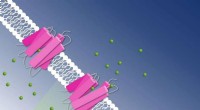
* Electron transport chain (occurs in the inner mitochondrial membrane) utilizes the high-energy electrons carried by NADH and FADH2 to create a proton gradient across the membrane. This gradient drives ATP synthase to produce a large amount of ATP (around 32 molecules per glucose molecule).
Therefore, while glycolysis and the Krebs cycle contribute to ATP production, the electron transport chain is responsible for the majority of ATP generated during cellular respiration.