Here's why:
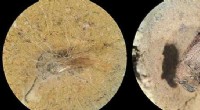
* Magnification: Microscopes allowed scientists to see objects that were too small to be visible to the naked eye. This opened up a whole new world of microscopic structures, including cells.
* Improved Resolution: Early microscopes, while simple, provided enough magnification and resolution to distinguish individual cells. This was crucial for scientists to recognize and identify these tiny building blocks of life.
Notable Figures:
* Robert Hooke: In 1665, Hooke used a compound microscope to observe thin slices of cork. He noticed small, box-like compartments that he named "cells" because they reminded him of the cells of a monastery.
* Anton van Leeuwenhoek: Using a single-lens microscope he crafted himself, Leeuwenhoek observed a variety of microscopic organisms in pond water, blood, and other samples. His observations significantly contributed to the understanding of microorganisms and the diversity of life.
While the microscope wasn't the only factor in the discovery of cells, it was undoubtedly the most important tool that made this groundbreaking discovery possible.