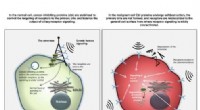
1. Cell Wall: Plant cells have a rigid cell wall made of cellulose that surrounds the cell membrane, providing structural support and protection. Animal cells lack a cell wall.
2. Chloroplasts: Plant cells contain chloroplasts, organelles responsible for photosynthesis. They are filled with chlorophyll, the pigment that captures sunlight energy. Animal cells do not have chloroplasts.
3. Vacuoles: Plant cells typically have a large, central vacuole that stores water, nutrients, and waste products. Animal cells may have smaller vacuoles, if any.
4. Centrioles: Animal cells have centrioles, which are involved in cell division. Plant cells generally lack centrioles.
5. Plasmodesmata: Plant cells have plasmodesmata, small channels that connect adjacent cells, allowing for communication and transport of molecules between them. Animal cells lack plasmodesmata.