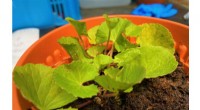
1. Vegetative Propagation: This is the most common type of asexual reproduction. It involves using plant parts like stems, roots, or leaves to create new, genetically identical plants. Examples include:
* Cuttings: Taking a piece of stem, root, or leaf and placing it in a suitable medium to grow roots.
* Layering: Bending a stem and burying a portion in the soil to induce root growth.
* Division: Separating a plant into smaller sections, each with roots and shoots, to create new plants.
* Grafting: Joining a cutting from one plant (scion) onto the root system of another (rootstock).
2. Spore Formation: Some plants, especially ferns and mosses, reproduce through spores. Spores are tiny, single-celled structures that can develop into new plants without needing to fuse with another cell (like a seed).
3. Apomixis: This is a less common form of asexual reproduction where seeds are produced without fertilization. The seeds are genetically identical to the parent plant. This occurs in some plants like dandelions and citrus fruits.