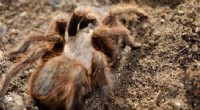
Sea Spiders (Pycnogonida):
* Phylum: Arthropoda (same as insects, spiders, crustaceans)
* Class: Pycnogonida
Euglena:
* Kingdom: Protista (a diverse group of mostly single-celled organisms)
* Phylum: Euglenozoa
The Gap:
The key difference is that sea spiders are animals (belonging to the animal kingdom) and euglena are protists. This means there's a vast evolutionary distance between them.
Classifying the "Between":
There isn't a single group that neatly fits "between" sea spiders and euglena. The evolutionary path from protists to animals is complex and involves many intermediate groups, each with its own unique features.
Here's how scientists might approach this:
1. Looking at Shared Ancestry:
* They would look for common ancestors and trace the evolutionary lineages back to a point where the two groups diverged. This might lead to examining groups like:
* Choanoflagellates: These are single-celled protists considered to be closely related to animals.
* Porifera (sponges): The most primitive group of animals.
2. Focusing on Specific Traits:
* Scientists could focus on specific traits like:
* Cell Structure: Animal cells lack cell walls, while protist cells often have them. This could be examined to find intermediate forms.
* Nutrition: Animals are heterotrophic (eat other organisms), while euglena can be both photosynthetic (making their own food) and heterotrophic.
* Movement: Sea spiders have legs and move actively, while euglena can move with flagella.
It's Important to Note:
* Evolution is a continuous process, so there isn't always a clear line between groups.
* The "between" might be a series of evolutionary stages or transitions, not just one group.
In Conclusion:
Classifying the space between sea spiders and euglena isn't about finding a single group but rather understanding the complex evolutionary journey from simple single-celled life to complex animals like sea spiders.