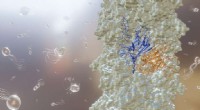
1. Phospholipids: These are the most abundant component and form the structural basis of the membrane. They have a hydrophilic (water-loving) head and a hydrophobic (water-fearing) tail, which arrange themselves in a bilayer with the heads facing the aqueous environment inside and outside the cell, and the tails forming the interior of the membrane.
2. Cholesterol: This lipid molecule helps to maintain the fluidity and stability of the membrane. It inserts itself between phospholipids and prevents them from packing too tightly, which would make the membrane rigid.
3. Proteins: These are embedded within the phospholipid bilayer and perform a variety of functions, including:
* Transport proteins: Facilitate the movement of molecules across the membrane.
* Receptor proteins: Bind to specific signaling molecules and trigger cellular responses.
* Enzymes: Catalyze biochemical reactions.
* Structural proteins: Provide support and shape to the membrane.
4. Carbohydrates: These are attached to lipids (forming glycolipids) or proteins (forming glycoproteins) on the outer surface of the membrane. They play roles in cell recognition, adhesion, and signaling.
While these are the main components, there are other molecules present in smaller quantities, like glycosphingolipids, which contribute to the complex and dynamic nature of the cell membrane.