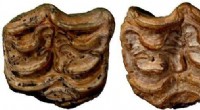
In 1665, Hooke used a crude microscope to examine a thin slice of cork. He observed tiny, box-like compartments that he called "cells" because they reminded him of the cells in a monastery. While he didn't understand the true nature of these compartments, his observations were a crucial first step in understanding the basic building blocks of life.
Later, scientists like Anton van Leeuwenhoek and Matthias Schleiden built upon Hooke's work, further exploring and defining the cellular structure and function.
Here's a summary of key discoveries that led to our current understanding of cells:
* Robert Hooke (1665): Observed and named "cells" in cork.
* Anton van Leeuwenhoek (1674): Improved microscopes and observed single-celled organisms like bacteria and protozoa.
* Matthias Schleiden (1838): Proposed that all plants are made of cells.
* Theodor Schwann (1839): Proposed that all animals are made of cells.
* Rudolf Virchow (1855): Proposed that all cells arise from pre-existing cells.
These discoveries, and many others, have led to the Cell Theory, which states that all living things are made of cells, that cells are the basic unit of life, and that all cells arise from pre-existing cells. This theory remains a cornerstone of modern biology.