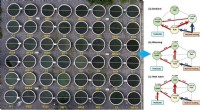
1. Stochasticity (Randomness):
* Gene expression noise: The process of gene expression itself is inherently stochastic. Even in identical cells, the timing and levels of gene expression can fluctuate due to random variations in protein production, transcription factor binding, and other molecular processes. This variability can lead to differences in protein levels and ultimately, phenotypic differences.
* DNA replication errors: While DNA replication is highly accurate, occasional errors can occur, leading to subtle differences in the DNA sequence between identical cells. These differences can impact gene expression and contribute to phenotypic variation.
2. Environmental Fluctuations:
* Microbial microenvironment: Even within a seemingly homogeneous environment, individual E. coli cells may experience slightly different microenvironments due to variations in nutrient availability, pH, oxygen concentration, and other factors. These subtle environmental differences can influence gene expression and lead to phenotypic variation.
3. Epigenetic Mechanisms:
* DNA methylation: Changes in DNA methylation patterns, without altering the underlying DNA sequence, can influence gene expression. These epigenetic modifications can be inherited and contribute to phenotypic differences between identical cells.
* Chromatin structure: Variations in chromatin structure, which affects accessibility of DNA to transcription factors, can also impact gene expression and lead to phenotypic variation.
4. Cellular Age and History:
* Cell cycle stage: The stage of the cell cycle can influence gene expression and potentially lead to phenotypic differences.
* Previous environmental exposure: E. coli cells can "remember" past environmental conditions, influencing their subsequent behavior and phenotype. This can involve changes in gene expression or epigenetic modifications that persist over generations.
5. Interactions with Other Cells:
* Cell-cell communication: E. coli cells can communicate with each other through various signaling molecules. These interactions can influence gene expression and lead to phenotypic differences within a population.
6. Genetic Variation:
* Horizontal gene transfer: E. coli cells can acquire new genes through horizontal gene transfer, which can introduce genetic differences between identical cells.
While all these factors can contribute to phenotypic variation in E. coli, their relative importance can vary depending on the specific environmental conditions and the trait being studied. Understanding these mechanisms is crucial for comprehending the complex dynamics of microbial populations and their ability to adapt to diverse environments.