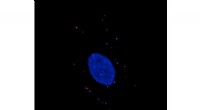
Here's a breakdown:
* Cytoplasm: This is the jelly-like substance that fills the cell and contains various organelles responsible for the cell's functions.
* Nucleus: This is the control center of the cell, containing the cell's genetic material (DNA).
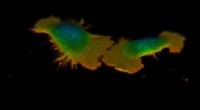
Protoplasm is essentially the entire living material within the cell membrane. It is responsible for all the vital activities of the cell, such as metabolism, growth, reproduction, and response to stimuli.
Here are some key characteristics of protoplasm:
* It is a complex mixture of organic and inorganic substances: This includes water, proteins, carbohydrates, lipids, nucleic acids, and various inorganic ions.
* It exhibits the properties of life: This includes growth, metabolism, irritability, and reproduction.
* It is a dynamic and constantly changing substance: The composition and structure of protoplasm change continuously in response to the cell's needs.
While the term "protoplasm" is not commonly used in modern biology, it still serves as a useful concept to understand the fundamental nature of living matter.