1. Genes as the Blueprint:
* Genes: These are the basic units of heredity, containing the instructions for building and maintaining an organism. They are carried on chromosomes and passed from parents to offspring.
* Variation: Every individual has a unique set of genes, leading to variations in traits within a population. This variation is the raw material for evolution.
2. Mutations: The Source of Variation:
* Mutations: Changes in the DNA sequence of genes. These changes can be spontaneous or caused by environmental factors.
* Types of Mutations: Mutations can be beneficial, harmful, or neutral. Beneficial mutations can give an organism an advantage in its environment, while harmful mutations can be detrimental. Neutral mutations have no noticeable effect.
* The Key Role: Mutations create new alleles (versions of genes) within a population, expanding the genetic diversity that natural selection can act upon.
3. Adaptations: The Result of Natural Selection:
* Natural Selection: The process by which individuals with traits better suited to their environment survive and reproduce more successfully than those with less advantageous traits.
* Adaptation: A trait that increases an organism's fitness (survival and reproduction) in a specific environment. Adaptations are the result of natural selection acting on genetic variations.
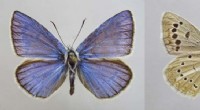
* Example: A moth with a mutation that gives it darker wings may be better camouflaged in a polluted environment, allowing it to survive and reproduce more successfully than moths with lighter wings.
4. The Cycle of Evolution:
* Evolution: The gradual change in the genetic makeup of a population over time.
* The Process:
1. Mutation: New genetic variations arise through mutations.
2. Selection: Individuals with advantageous mutations are more likely to survive and reproduce.
3. Inheritance: These advantageous traits are passed on to offspring.
4. Change: Over generations, the frequency of the advantageous traits increases in the population, leading to adaptation and evolution.
In summary:
* Mutations introduce new genetic variations.
* Natural selection acts on these variations, favoring traits that increase survival and reproduction in a given environment.
* This process leads to the accumulation of advantageous traits, resulting in adaptations and the evolution of new species over time.