Here's why:
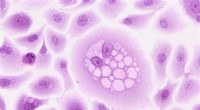
* Cytoplasm is the "jelly-like" substance that fills the space between the cell membrane and the nucleus.
* It contains the cell's organelles (like mitochondria, ribosomes, Golgi apparatus), which carry out essential functions like energy production, protein synthesis, and transportation.
* Many metabolic reactions occur directly within the cytoplasm.
While the nucleus houses the genetic material (DNA) and plays a critical role in cell division and protein synthesis, the majority of the cell's day-to-day functions happen within the cytoplasm.