Here's a breakdown of how gradualism works:
Key Concepts:
* Natural Selection: Organisms with traits better suited to their environment are more likely to survive and reproduce, passing those beneficial traits on to their offspring.
* Variation: Within a population, individuals have slightly different traits. This variation is caused by mutations (random changes in DNA) and sexual reproduction.
* Time: Evolution occurs over vast spans of time, allowing small changes to accumulate and lead to significant differences.
How Gradualism Works:
1. Small Changes: Mutations introduce new variations into a population. These changes might be very small, affecting a single gene or a small portion of an organism's DNA.
2. Differential Reproduction: Individuals with traits better suited to their environment are more likely to survive, find mates, and reproduce. This means they pass on their advantageous traits to their offspring.
3. Accumulation of Changes: Over many generations, these small beneficial changes accumulate. Each generation inherits the beneficial traits of its ancestors, leading to gradual shifts in the overall characteristics of a population.
4. Speciation: Over extremely long periods, these gradual changes can become so significant that they lead to the formation of new species. This process is called speciation.
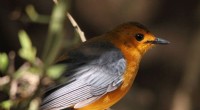
Example: Imagine a population of birds living in a forest. Some birds might have slightly longer beaks than others. If the forest starts to experience a drought, birds with longer beaks might be better at reaching seeds and insects in the drying ground. Over time, birds with longer beaks are more likely to survive and reproduce, passing on their longer beak genes. Eventually, the population might become so distinct from the original population that it is considered a new species.
Gradualism vs. Punctuated Equilibrium:
Gradualism is one of the main models of evolution, alongside punctuated equilibrium. Punctuated equilibrium suggests that evolution can occur in bursts of rapid change, followed by long periods of stability. Both models are supported by evidence, and the actual process of evolution likely involves a combination of gradual and punctuated changes.