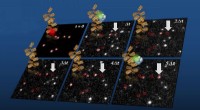
1. Facilitated Diffusion:
* Glucose enters the cell via facilitated diffusion, which means it moves down its concentration gradient (from high to low concentration) with the assistance of a protein.
* This process doesn't require energy and relies on the GLUT (glucose transporter) proteins embedded in the cell membrane.
* GLUT proteins have specific binding sites for glucose. When glucose binds to the transporter, it changes shape, allowing glucose to move across the membrane.
2. Active Transport:
* In some cases, cells might need to move glucose against its concentration gradient, from low to high concentration. This requires energy and involves a different type of protein transporter called sodium-glucose cotransporters (SGLTs).
* SGLTs use the energy stored in the sodium ion gradient to move glucose against its concentration gradient. This is crucial for the absorption of glucose in the intestines, for example.
In summary:
* Facilitated diffusion is the primary way glucose moves across cell membranes, driven by the concentration gradient and the help of GLUT proteins.
* Active transport is used in specific situations where glucose needs to be transported against its concentration gradient, powered by the sodium ion gradient and SGLTs.
Key points:
* Glucose is polar and too large to pass through the lipid bilayer of the cell membrane directly.
* GLUT proteins facilitate glucose transport across the membrane by binding to it and changing shape.
* SGLTs use energy to move glucose against its concentration gradient, crucial for absorption in the intestines.